How to Clean and Maintain Treatment Tables: The Complete Guide
Proper cleaning, careful maintenance, and the right products will keep your treatment table hygienic, professional-looking, and performing at its best for years to come.

Updated 18/03/26
Want your treatment table to last longer and look great? Proper cleaning and maintenance are key. Here’s how to keep your table hygienic, functional, and professional-looking:
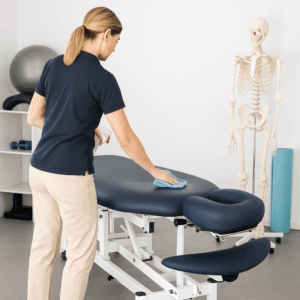
- Daily Cleaning: Clean surfaces with a microfibre cloth and a gentle pH-neutral cleaner or mild soap. Rinse with fresh water.
- Weekly Deep Clean: Use a gentle pH-neutral cleaner or mild soap and a soft bristle brush or bleach-based cleaners for PVC fabrics (Encore or Ultimate).
For PU fabrics (Evolve or Ultra), use the method above or an alcohol-based cleaner. Rinse with fresh water. Do not use excessive friction when cleaning.
Always double-check your upholstery type first. - Monthly Maintenance: Check that all moving parts operate smoothly. If unsure about any mechanical parts, always contact Alevo support before making adjustments.
- Regular Checks: Note: Do not use power tools; only use handheld tools.
Portables: If you notice loose screws, tighten them slightly – do not overtighten. Alevo tables are precision-manufactured, and some parts are friction-based, so excessively tightening screws can cause malfunction. Do not lubricate components.
Motorised Tables: Check upholstery and frame bolts. If you notice any loose bolts, tighten them slightly – do not overtighten. Lubricate components if required. Do not lubricate the actuator (motor); this is a self-lubricating device. - Storage Tips: Avoid direct sunlight, use covers, and store in a cool, dry place.
Official maintenance guides
Before we jump into the general trips and tips, our team have written comprehensive table-specific maintenance guides. Check this docs out as a start point:
Note that this list isn’t complete and there are plenty of other helpful resources on the Alevo Care page of our website.
Why does it matter?
Clean tables prevent cross-contamination, meet Australian healthcare standards, and save you money on repairs. Plus, they leave a great impression on clients. Follow these steps to maintain hygiene, extend your table’s lifespan, and showcase your professionalism.
Alevo Upholstery Comparisons
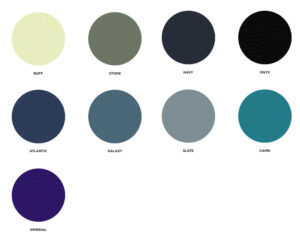
EVOLVE or ULTRA PU
- Hard-wearing with a soft feel
- Adapts quickly to body temperature for a softer and more comfortable feel
- Responds better to disinfectant cleaners
- Resistance to sweat and oil, making it ideal for remedial, Kahuna and Lomi-Lomi massage therapies
- Environmentally friendly water based manufacturing process
- Made with high-quality resins – 7-year hydrolysis resistance
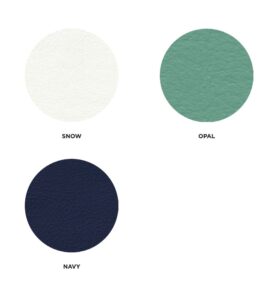
ENCORE PVC (vinyl) A hard-wearing fabric.
ULTIMATE PVC (vinyl) A heavy-duty fabric with a luxurious leather look and feel.
- Ezyclean surface protection will ensure the easy removal of tough stains using a 10% bleach solution – suitable for healthcare and commercial environments.
- Sanitised to inhibit bacteria, mold and mildew
- Does not deteriorate with age
- Good choice for hot and humid climates
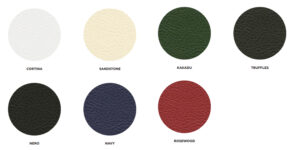
TAURUS GENUINE LEATHER Supple and durable with a low-maintenance protective finish.
- Will not harden, blister or split
- Can last up to 10-15 years before reupholstering is required
- Do not use in a medical application as leather is naturally porous and therefore difficult to disinfect
Cleaning Methods
Keeping treatment tables clean requires using the right methods based on the level of cleaning needed.
At a minimum, clean the table between each patient, but there’s a big difference in what’s required if you’re doing a full-body massage with oils in a heated room, compared to seeing a clothed patient for injured-related treatment.
Daily Cleaning: Keeping It Fresh
Here’s what you’ll need: a microfibre cloth, a gentle cleaner, and a soft-bristled brush.
Steps for daily cleaning
- Check the table for visible dirt, oil, sweat, or damage.
- Use a soft brush to remove any loose debris.
- Dampen the microfibre cloth with a pH-neutral cleaner or mild soap.
- Wipe all surfaces, including the tabletop, sides, face cradle, armrests, and leg supports.
- Reinse with fresh water and finish by drying everything with a clean, dry cloth.
Even if you use towelling covers, clean the vinyl underneath daily. Shiny patches on the table after removing covers are a sign that massage oils or sweat have seeped through.
PVC (vinyl) vs PU (Polyurethane) Coated Fabrics – A Quick Comparison
PVC (vinyl) and PU (polyurethane) coated fabrics are both synthetic upholstery materials, but they differ significantly in care.
PVC is durable but needs careful, gentle cleaning to stay flexible. Bleach solutions should only be used cautiously during virus control (i.e. COVID) situations and must be rinsed and dried thoroughly, otherwise you risk degrading the vinyl.
Strong hospital-grade sprays or alcohol-based disinfectants can cause vinyl to harden, blister, and crack quickly.
PVC is a hard plastic softened during manufacturing. Over time, sunlight, oils, and regular use can cause it to dry out, harden, and eventually crack.
Alevo’s Evolve and Ultra PU fabrics are safe for disinfection using 50–70% alcohol solutions, isopropyl wipes, or benzalkonium chloride disinfectants like Viraclean. If you’re unsure what fabric your table is upholstered in, stick to mild, pH-neutral cleaners to avoid damage.
Maintenance is essential for the longevity of fabrics. PU-coated fabric is generally easier to care for as it is resistant to massage oils and body oils, and can be cleaned with alcohol-based products. In contrast, PVC-coated fabric requires more careful handling to maintain its appearance and integrity. However, with proper care, PVC-coated fabric can outlast PU-coated fabric.
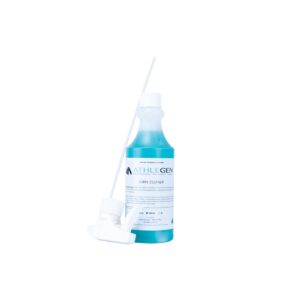
Proper Sanitisation
For professional sanitisation, it’s important to choose the right cleaning products based on your table’s material.
| Material Type | Recommended Cleaner | Tips for Care |
| PVC (vinyl) | 10% bleach solution | Rinse after cleaning |
| PU | Gentle antimicrobial cleaner or alcohol-based cleaner | Rinse after cleaning |
| Silicone | Gentle antimicrobial cleaner or alcohol-based cleaner | Rinse after cleaning |
In addition to daily cleaning, aim for a weekly deep clean. Use antimicrobial cleaners and allow enough contact time for proper disinfection – refer to manufacturers’ recommendations.
Removing Tough Stains
For stubborn stains that don’t come off with regular cleaning, follow these steps:
- Act Quickly: Use a mild soap solution and a soft cloth to clean the area as soon as possible.
- Targeted Cleaning: Apply a specialised cleaner that’s safe for your table’s material. Always test it on a small, hidden area first.
- Professional Products: If needed, use purpose-made cleaning products. Be gentle – apply minimal pressure, work from the edges of the stain inward, avoid soaking the material, and dry thoroughly.
Using protective covers, like our Terry Towelling cover, between clients can help prevent stains and make cleaning easier.
Regular Maintenance Steps
Taking care of your treatment table through regular maintenance helps keep it in good shape, extends its lifespan, and ensures it meets professional standards.
The Alevo range of products carries a strong structural warranty because our products are manufactured with longevity in mind, but they need to be treated kindly to reach their full life span.
These steps go hand-in-hand with your cleaning routine, helping to prevent wear and reduce the risk of expensive repairs.
Upholstery Care
Different upholstery types need specific care.
Caring for PVC (vinyl) Upholstery:
- Always clean PVC regularly to remove perspiration, oils, and grime.
- Use only Athlegen Vinyl Cleaner or completely neutral soaps like Sunlight Soap.
- Avoid detergents, disinfectants, chemical products, solvents, and abrasive cleaners.
- Rinse and towel dry after cleaning.
- Always smooth out vinyl after each treatment to prevent permanent creasing.
- Avoid exposing your table to direct sunlight to prevent hardening and cracking.
- Protect surfaces from jewellery, rough clothing, and non-colourfast dyes.
- Launder towelling covers properly to remove oil residues. Use water-soluble massage oils like Athlegen Hydro 2 Oil.
If cracks appear, organise reupholstery as soon as possible. Cracks allow oils and cleaning agents to seep into the cushioning, leading to odours, foam deterioration, and hygiene risks.
Portable Hardware Checks
Inspecting mechanical parts on your portable table regularly can help you catch small issues before they become major problems. Focus on these components:
| Component | What to Check For | Action to Take |
| Hinges | Squeaking or stiffness | Check if connected bolts and screws require tightening. Do not lubricate. |
| Bolts and screws | Looseness | Tighten using the right tools. |
| Height adjustment mechanism | Smooth operation | Clean and check if connected bolts and screws are excessively loose. Contact Alevo for specific maintenance advice before making adjustments to your table. |
| Cable connections (electric tables) | Signs of wear or damage | Replace damaged cables. |
Storage Guidelines
Proper storage is just as important as regular use and cleaning. Follow these tips to protect your table:
- Keep it in a climate-controlled, shaded area.
- Avoid direct sunlight to prevent material degradation.
- Cover the table when not in use.
- Secure all locking mechanisms before moving to prevent accidents.
Common Problems and Solutions
Even with regular care, tables can sometimes face issues. Here’s how to handle some of the most frequent ones:
Noisy Hinges
If hinges become noisy or stiff, it could indicate wear and tear, which might interfere with functionality. Here’s what to do:
- Clean the hinge area by removing dust and debris.
- Check the connected bots, nuts and screws for looseness. Give any loose screws or nuts a few cranks to tighten, but avoid overtightening. If you have any uncertainties, contact the Alevo support team for specific advice.
Make this part of your routine upkeep, or address it as soon as you notice any noise. Also, don’t overlook fixing any upholstery issues promptly.
Surface Damage
Different types of surface damage require specific fixes. Here’s a quick guide:
| Damage Type | Solution | Prevention Tips |
| Minor tears | Use a vinyl repair kit with colour matching. | Place protective sheets. |
| Cracking | Time to reupholster. | Use protective sheets. |
| Surface stains | Clean immediately with mild soap. | Cover surfaces with sheets. Be aware that some stains, like pen marks or dye transfer from clothing, may be permanent. Using fitted protective covers can prevent most surface damage. |
Essential Supplies: Being Prepared
You don’t need a ton of specialist tools to look after your Alevo table properly, but we strongly recommend having these on hand:
Repair Tools
These are the tools you need for basic upkeep:
- A basic toolkit: Includes Phillips flathead screwdrivers, flat spanners and Allen keys. Although, as a caution, it’s better to get in contact with our support team if you need to be playing around with the structural configuration of your table.
- Microfibre cloths and non-abrasive sponges: Prevent scratches during cleaning.
Note: If your upholstery, table or motor is damaged, your best option is to reach out to our support team. We have dedicated specialists who can help service and repair your table to get it back to health.
Protection Items
Add a layer of protection to your table with these items:
- Table covers: Terry Towelling covers (available in Navy and White) for extra durability.
- Jersey covers: Great for everyday use.
- Disposable paper rolls: Maintain hygiene between clients.
- Non-slip pads: Reduce wear in high-use areas.
Conclusion
Proper table maintenance improves hygiene, extends the life of your equipment, and helps avoid costly repairs.
Daily cleaning, weekly sanitising, and monthly conditioning are essential, with material-specific care for PVC and PU fabric.
Regular hardware checks and thoughtful storage prevent wear and ensure safety. Protective covers and the right cleaning products reduce damage, while prompt attention to small issues keeps tables looking and functioning like new.